Unified Communications
Oct 26, 2026
6 min read
Most voice projects we see in Riyadh, Jeddah and Dammam start the same way: an ageing analogue or digital PBX is out of support, a new office is opening, or the business wants staff to answer calls from laptops and mobiles. The buyer is then hit with overlapping terms: IP telephony, SIP trunks, cloud PBX, UCaaS, managed voice. Underneath the labels there are only four decisions. Where call control lives, how calls reach the public network, how that connection is secured, and which phones and LAN will carry the calls. This guide walks through each one using products we supply.
Decide where call control should live
An on-premises IP PBX means you own the hardware and licences, keep call control inside your building or data centre, and can keep using existing analogue lines and digital handsets during migration. You need in-house skills or a support contract to run it. A cloud or hosted PBX moves the platform to a provider on a subscription basis, which reduces equipment on site but makes every call dependent on internet quality and raises questions about where call records and recordings are stored. For government entities and regulated sectors, data location and NCA cloud requirements often settle this question before features do. Many Saudi organisations end up hybrid: premises call control at head office, SIP trunks from a local operator, and softphone licences for mobile staff.
Avaya IP Office: one site to many
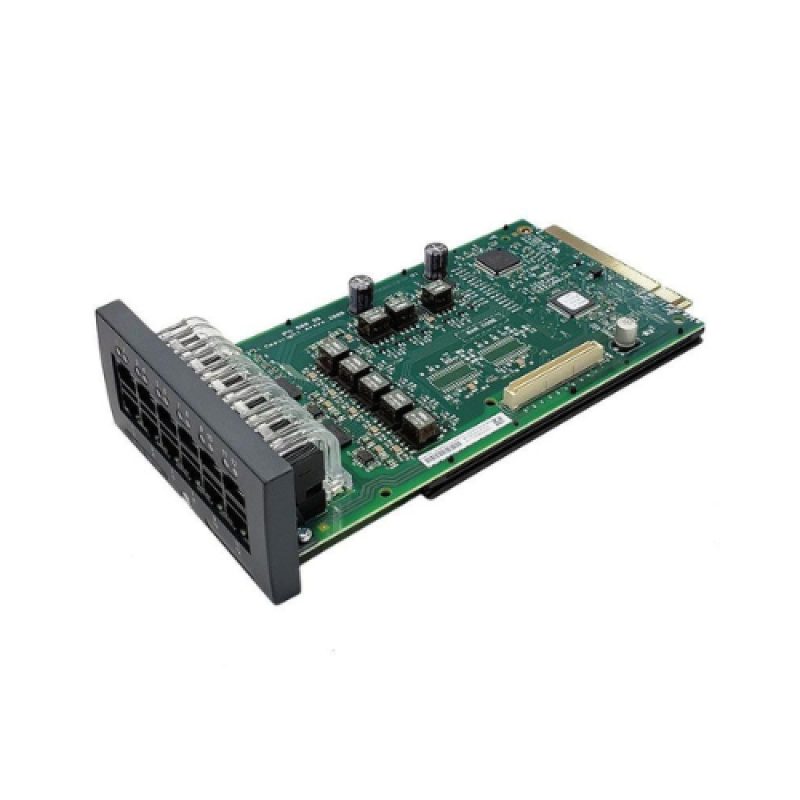
For a single site that still has analogue lines or digital phones, the Avaya IP500 Version 2A Control Unit (700514867) is the usual hardware base. The IP Office IP500 Trunk Analog 4U V2 (700503164) terminates analogue lines, the IP500 Extension Card Digital Station 8 (700417330) lets you keep existing digital handsets, and a Media Card VCM 32 V2 (700504031) or VCM 64 V2 (700504032) provides the voice compression channels needed whenever IP phones or SIP trunks talk to non-IP lines and extensions. On the licence side, the IP Office R12 Essential Edition License (LIC:DS) enables the system, the R10+ SIP Trunk 1 License (LIC:CU) is counted per SIP channel, and the R10+ Avaya IP Endpoint 1 License (LIC:CU) is needed per IP phone. Larger or multi-site deployments move to the R11 Server Edition License (LIC:DS), and the R10+ IP500 Voice Networking 4 License (LIC:CU) links IP500 systems across branches.
Cisco offers a different path for branch-heavy organisations. The ISR4221/K9, ISR4321/K9 and ISR4331/K9 routers can run Communications Manager Express for smaller sites, licensed per phone with A-FLEX-EP-CME. Where branch phones register to a central Cisco call-control platform, A-FLEX-SRST-ADD adds Survivable Remote Site Telephony so local calling continues if the WAN link fails. A-FLEX-STD-CUBE enables Cisco Unified Border Element on the router, which acts as the session border controller towards the SIP trunk. User-based Collaboration Flex licences such as A-FLEX-NUPL-A, A-FLEX-NUPL-E and A-FLEX-NUPL-P cover different user tiers, so the mix should follow what each group of staff actually needs.
Size SIP trunks by concurrent calls, not headcount
In the Kingdom, SIP trunks are provisioned by licensed telecom operators under CST regulation. We supply and configure the PBX and border side and coordinate the handover with your carrier. Size the trunk on the number of simultaneous external calls at the busiest hour, not on the number of employees. Your current PBX call logs are the best evidence. Reception-heavy offices and contact centres need a much higher ratio of channels to users than back-office teams. Remember that licence counts must match: an IP Office with ten carrier channels still needs ten SIP trunk licences. Bandwidth per call depends on the codec, and it must be protected with QoS on the WAN and the internet link, otherwise voice quality drops whenever someone starts a large download.
Secure the edge: session border controllers and firewalls
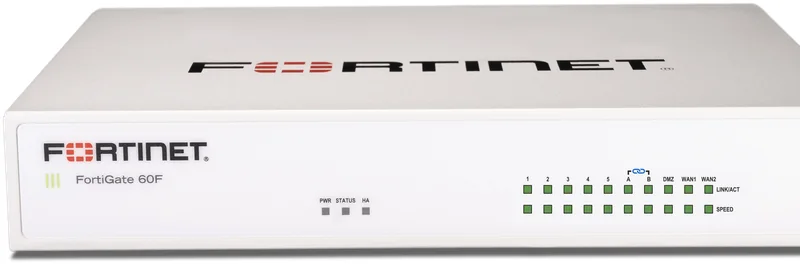
An exposed SIP service is scanned constantly and toll fraud is a real financial risk. A session border controller hides the internal PBX, normalises carrier signalling and controls remote users. On Avaya, the ASBCE Core Dell 1425 Compact Server (1425) with the ASBCE R10 Dynamic License (LIC:CU) and R10 Premium Services Session License (LIC:CU) supports trunking and remote-worker scenarios. On Cisco, CUBE on the ISR fills the same role. A FortiGate in front, for example the FortiGate 60F + 1 Yr UTP Bundle (FG-60F-BDL-950-12) at a branch, should restrict SIP traffic to your carrier addresses, and its SIP helper behaviour must be tested, because mismatched SIP handling is a common cause of one-way audio. Under the NCA Essential Cybersecurity Controls, voice servers, SBCs and phones belong in your asset inventory, privileged access, logging and patching processes like any other system.
Feature licences are where budgets drift, so define them early. On IP Office, the R12 Preferred Voicemail Pro License (LIC:DS) provides voicemail and auto-attendant functions, while the R10+ Media Manager License (LIC:DS) handles archiving and retrieval of recorded calls. The R10+ CTI License (LIC:DS) supports integration with CRM and business applications, and the R10+ Receptionist 1 License (LIC:CU) serves operator positions. For remote and mobile staff, the R10+ Softphone 1 License (LIC:DS), R11 Mobile Worker 1 License (LIC:CU) and R11 Office Worker 1 License (LIC:CU) bundle different capabilities. Agree a recording retention period with legal and compliance before sizing storage, and check whether a full contact-centre platform is needed or whether hunt groups and recording are enough.
Phones and the LAN underneath
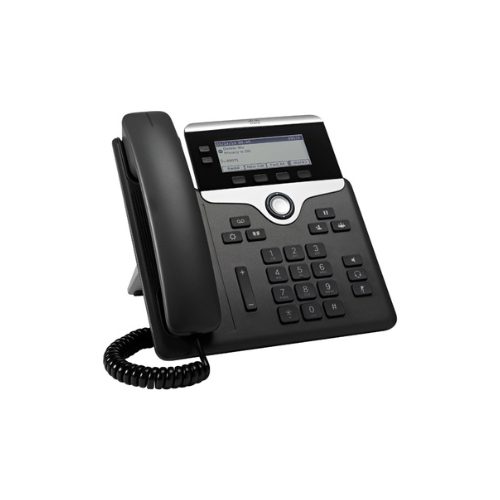
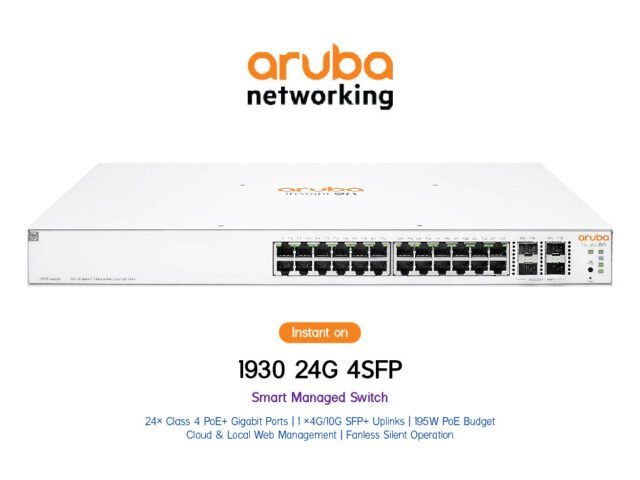
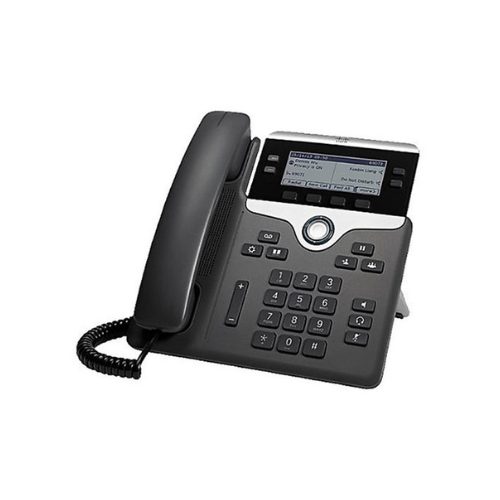
Choose handsets by role. Avaya J129 and J139 suit general desks, J159, J179 and J189 suit heavier users, the Vantage K155 and K175 add video, and the B199 Conference Phone covers meeting rooms. On Cisco, the CP-7821-K9 and CP-7841-K9 cover standard desks, the CP-8845-K9 and CP-8861-K9 serve managers and video users, the DP-9841-K9 and DP-9861-K9 belong to the newer Desk Phone 9800 line, and the CP-8832-K9 handles conference rooms. Confirm each model and firmware is supported by your call-control platform before ordering. The Avaya J179 IP Phone (Global, No Power Supply) assumes PoE, so the access switches matter: options include the Aruba Instant On 1930 24G 4SFP/SFP+ 195W Switch (JL683A), Fortinet FortiSwitch 124F-FPOE (FS-124F-FPOE) or Cisco Catalyst. Configure a voice VLAN and QoS from day one.
Getting a quotation from Shabackat
Shabackat supplies genuine, new Avaya, Cisco, Fortinet, Aruba and Huawei products with the manufacturer's warranty, and can install, configure and support the system, whether you want us to manage it or hand it over to your team. To get an accurate quotation, send us the number of users and sites, your existing lines and phones, your SIP carrier if chosen, and the features you need such as recording, softphones or CTI. Pricing is by quotation, stocked items are quoted the same day, and we deliver across the Kingdom. Contact us on WhatsApp or phone at +966 55 826 9606, or use the quote form on shabackat.sa.