
Cisco vs Aruba Wireless: Picking by Management Model
Both make excellent access points. The decision that matters is how the network is managed and licensed, not which radio is faster.
Read More: Cisco vs Aruba Wireless: Picking by Management ModelOrganisations end up with mixed Cisco and Huawei estates for ordinary reasons: a merger, a phased refresh, a procurement decision that changed between projects, or a branch build priced separately from headquarters. The good news is that these networks work. The problems, when they appear, cluster in the same few places every time — and all of them are cheaper to handle in design than in troubleshooting.
Start from what is genuinely fine, because a lot of anxiety here is misplaced. VLAN tagging is 802.1Q on both sides. Link aggregation is 802.3ad. Spanning tree, in its standard forms, interoperates. OSPF and BGP are OSPF and BGP. A Huawei switch trunking to a Cisco switch, carrying tagged VLANs and participating in the same routing protocol, is unremarkable and will stay up.
If your design uses standard protocols across the vendor boundary, you have already avoided most of the trouble.
Stacking is proprietary. Cisco StackWise and Huawei stacking are not compatible with each other, and no amount of configuration changes that. The same applies to most chassis-level redundancy features.
The design consequence is simple: a stack is a single-vendor unit. Do not plan a wiring closet where two brands are supposed to behave as one logical switch. Put one vendor per stack, and cross the boundary with a standard aggregated link instead.
This is the one that generates the most support calls, and it usually presents as an IP phone that comes up on the wrong VLAN or does not come up at all.
Both vendors support LLDP, which is the standard, and LLDP-MED is what a phone should be using to learn its voice VLAN. The friction comes from Cisco Discovery Protocol, which is Cisco-specific: a Cisco phone in a Cisco-centric design may be relying on CDP without anyone having noticed, and a Huawei access switch will not speak it.
The fix is to standardise on LLDP-MED across the estate and verify that the phones are actually using it, rather than assuming. Do this on a test port before rolling out a floor, because the symptom is intermittent enough to waste a week.
Standard PoE and PoE+ negotiation is interoperable and rarely an issue. Where it does bite is at the upper end and with pre-standard behaviour: a high-draw device such as a multi-radio access point or a PTZ camera, on a switch whose per-port budget or negotiation behaviour differs from what the device expects.
Check the actual per-port and total power budget of the specific switch model against the actual draw of the specific device, at the class it negotiates rather than its idle figure. A powered device that boots and then resets under load is almost always this.
The genuine long-term cost of a mixed estate is not a protocol incompatibility. It is that you now operate two management planes, two firmware release cycles, two support contracts and two sets of engineer knowledge. Neither vendor manages the other, and the unified-monitoring answer is a third-party NMS speaking SNMP and increasingly telemetry.
That is workable and many organisations do it. But it should be a decision, taken with the operational overhead priced in, rather than a state you drift into one purchase order at a time.
Draw the vendor boundary at a layer or a site, not inside a closet. Cross it with standard protocols only. Standardise on LLDP-MED for device discovery. Verify PoE budgets against real device classes. Decide in advance which NMS is authoritative, and make sure both platforms feed it.
Then test the boundary before you need it: fail one link, reboot one switch, unplug one phone, and watch what happens. Mixed estates that were validated behave predictably; the ones that were assumed are where the outage stories come from.
If you are running or planning a mixed estate in the Kingdom, we supply and support both lines and can review the boundary design with you before it goes in.
Our engineers are happy to walk through your specific requirements and recommend the right approach — no obligation, no generic sales pitch.
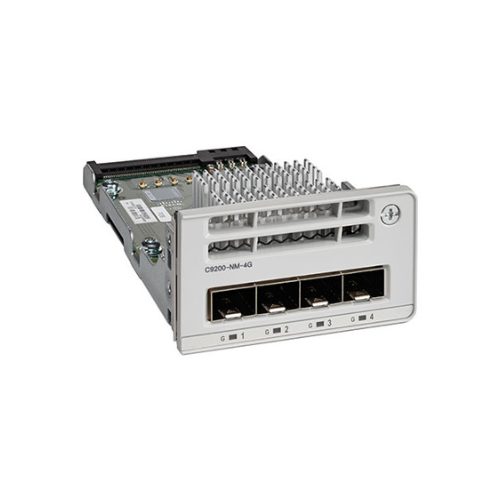
The Cisco C9200-NM-4G is a network module for Catalyst 9200 series switches, adding four 1 G…

The Huawei eKitEngine S110-16LP2SR is a 16-port Gigabit PoE switch with SFP uplinks, in the…
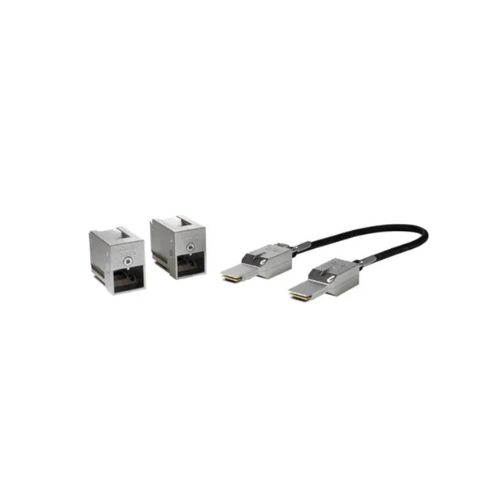
The Cisco C9200L-STACK-KIT is the hardware kit that physically joins Catalyst 9200L switches…
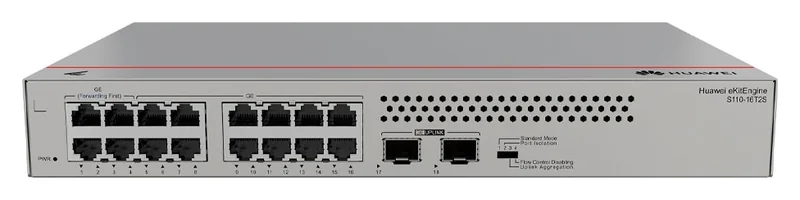
The Huawei eKitEngine S110-16T2S is a 16-port Gigabit switch with SFP uplinks and no PoE, in…
The Cisco Catalyst C1300-24FP-4G is the full-PoE version of the 24-port Catalyst 1300, with…
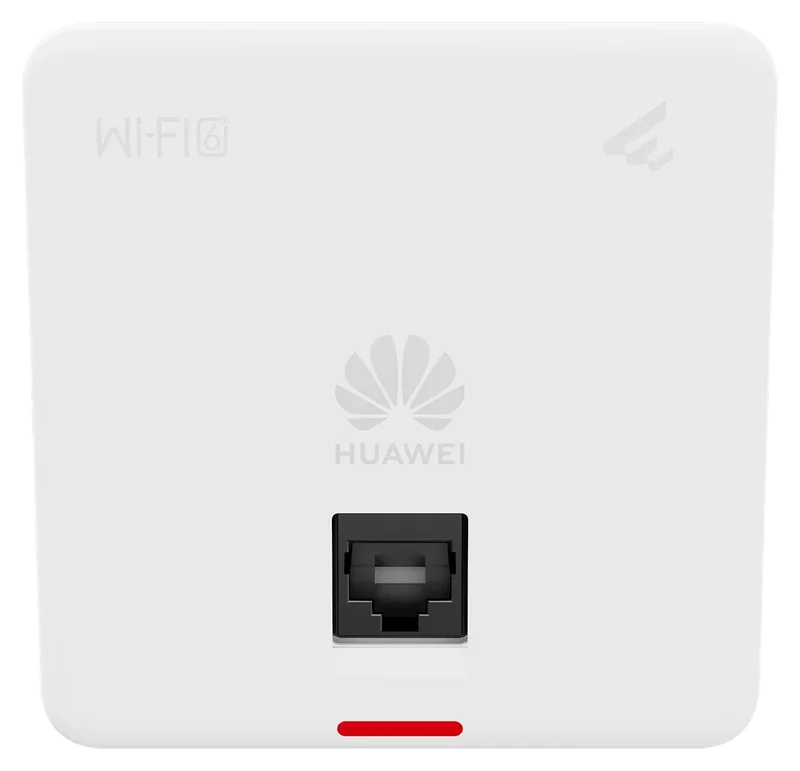
The Huawei AirEngine AP160 is a wall-plate Wi-Fi 6 access point, shaped to replace a faceplate…
Both make excellent access points. The decision that matters is how the network is managed and licensed, not which radio is faster.
Read More: Cisco vs Aruba Wireless: Picking by Management Model
Endpoint protection matters most when it talks to the firewall. Here is what the Security Fabric integration actually does, and what it does not.
Read More: Fortinet Endpoint Security: What the Fabric Buys You
Three capable platforms with genuinely different trade-offs in throughput per riyal, management model and licensing. Here is how to tell which fits.
Read More: Fortinet vs Palo Alto vs Cisco: Choosing a Firewall