
Cisco vs Aruba Wireless: Picking by Management Model
Both make excellent access points. The decision that matters is how the network is managed and licensed, not which radio is faster.
Read More: Cisco vs Aruba Wireless: Picking by Management ModelAlmost every telephony refresh we are asked to quote in Riyadh starts the same way: a shortlist with Avaya on one side and Cisco on the other, and a question about which one is better. It is the wrong question. Both platforms will carry your calls reliably for a decade. What actually separates them is how they are licensed, who is expected to administer them day to day, and how much of your existing estate you can carry forward.
Avaya IP Office grew up as a business telephony system and still shows it, in a good way. A single control unit handles calls, voicemail and the trunk connection, and the feature set is organised around users rather than around infrastructure. That makes it straightforward to size: you count people, pick an edition, and add user licences as you grow.
Cisco approaches the same problem from the network side. Call control is a piece of software you run — on-premises, or through Webex Calling — and it assumes an IP network that is already well managed. If your switching, wireless and WAN are already Cisco and administered by a network team, the telephony fits into a management model your staff already know.
This is where the two genuinely diverge, and where a headline price is misleading. Avaya IP Office licences are tiered by what a user needs: a basic extension, or a Power User with softphone and mobility, or Voicemail Pro on top of the system. You buy per person, and the codes on a quotation reflect that — a licence marked for a concurrent user behaves differently from one tied to a designated system.
Cisco licensing is subscription-shaped and increasingly cloud-anchored, which suits an organisation that wants operational spend and continuous upgrades, and suits an organisation with a fixed capital budget rather less. Neither model is wrong. But comparing a three-year Cisco subscription against a perpetual Avaya licence without normalising the term is the most common costing mistake we see.
A platform your team cannot administer is an expensive platform, regardless of its feature list. Avaya IP Office is commonly administered by an IT generalist or by a partner under a support contract; the day-to-day tasks — adding a user, changing a hunt group, restoring voicemail — are contained. Cisco call control rewards a team that already thinks in terms of dial plans, regions and codecs, and it punishes one that does not.
Ask the honest question in-house before shortlisting: do we want to own this skill, or buy it? If the answer is buy it, the licensing model and the support arrangement matter more than any feature comparison.
A refresh is rarely a clean sheet. If you have IP500 V2 control units with life left in them, expansion modules and digital station cards, the incremental cost of staying on Avaya is small — the cards, the licences and the handsets carry forward. If you have a Catalyst access layer and a Cisco-trained team, the same logic points the other way.
Handsets are the part people underestimate. Phones are the largest line item by count in most quotes, they last a long time, and they are not portable between platforms. A decision that looks marginal on the system cost can become obvious once several hundred desk phones are priced.
Two things come up in every Kingdom deployment. The first is data residency: if call recording or voicemail is in scope, decide early where those recordings will live, because the answer interacts with the PDPL and with whatever your sector regulator expects. A cloud-anchored platform is not disqualified by that, but it does need the question answered before contract, not after.
The second is trunking. Whichever platform you choose has to terminate SIP trunks from a local operator, and the interoperability details — codec, transport, registration behaviour — are worth confirming against your specific operator during design rather than assuming.
If your estate is already Cisco end to end and you have network staff, Cisco call control removes a management silo. If telephony is a discrete service you want sized by headcount and supported by a partner, Avaya IP Office is usually simpler to own and easier to budget. If you have neither preference and no legacy, get both quoted over the same term with the same user count and the same handset model — the difference is normally clear once the comparison is genuinely like for like.
We supply and deploy both. If you would like a like-for-like comparison against your current extension count and trunk arrangement, send us the details and we will quote both platforms on the same basis.
Our engineers are happy to walk through your specific requirements and recommend the right approach — no obligation, no generic sales pitch.

The Cisco CP-3905 sits at the entry point of Cisco's desk phone range, an IP desk phone built…
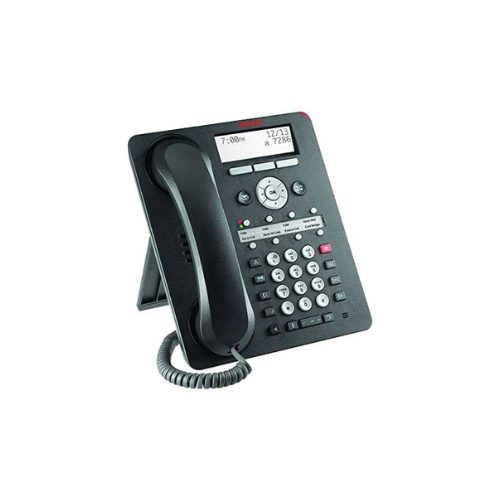
The Avaya 1408 is a digital desk phone from the 1400 Series with programmable call-appearance…
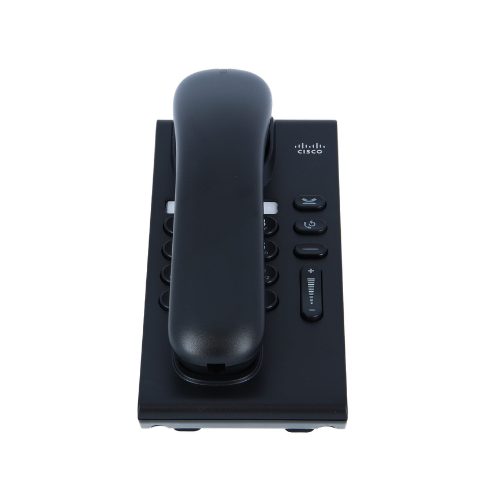
The Cisco CP-6901-C-K9 is the entry point of Cisco's 6900 Series: a desk phone with a corded…
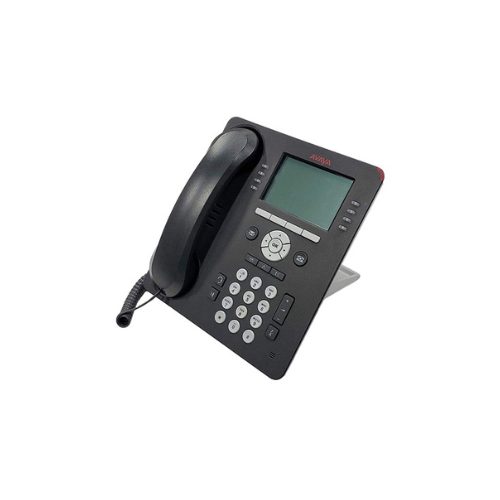
The Avaya 9508 is the digital desk phone in the 9500 Series, with a multi-line display for…
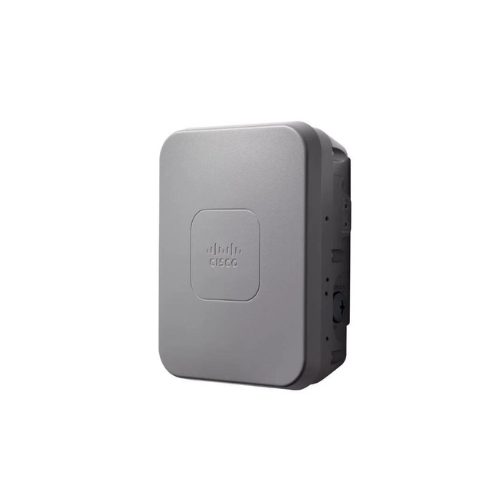
The Cisco AIR-AP-1562E-M-K9 is an outdoor-rated access point from the Aironet 1560 series…
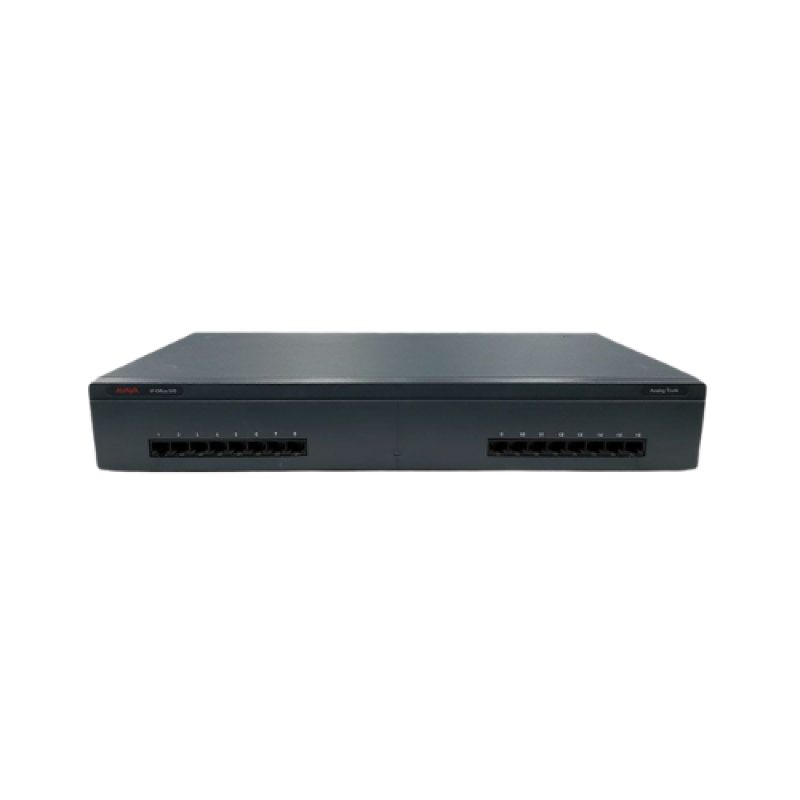
The Avaya IP Office IP500 Analog Trunk 16 Expansion Module is the high-capacity analogue trunk…
Both make excellent access points. The decision that matters is how the network is managed and licensed, not which radio is faster.
Read More: Cisco vs Aruba Wireless: Picking by Management Model
Endpoint protection matters most when it talks to the firewall. Here is what the Security Fabric integration actually does, and what it does not.
Read More: Fortinet Endpoint Security: What the Fabric Buys You
Three capable platforms with genuinely different trade-offs in throughput per riyal, management model and licensing. Here is how to tell which fits.
Read More: Fortinet vs Palo Alto vs Cisco: Choosing a Firewall